In today’s digital era, technology has become an essential part of our daily lives. We use smartphones, computers, tablets, and the internet for communication, education, shopping, banking, entertainment, and business. While these technologies provide convenience and efficiency, they also expose users to various online threats. Cyber security plays a vital role in protecting individuals, businesses, and governments from cyber attacks and ensuring that digital information remains safe and secure.
Cyber security refers to the practice of protecting computer systems, networks, software, and data from unauthorized access, cyber attacks, theft, or damage. It involves using technologies, policies, and best practices to defend digital assets from hackers, malware, phishing scams, ransomware, and other online threats. As the world becomes increasingly connected, cyber security has become one of the most important aspects of information technology.
Why Cyber Security is Important
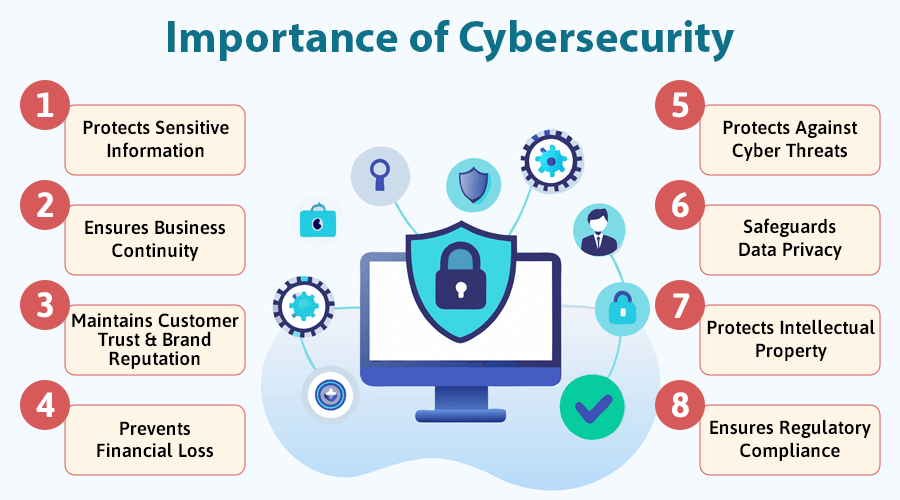
Every day, millions of people share personal information online, including passwords, bank account details, email addresses, and social media data. If this information falls into the wrong hands, it can lead to identity theft, financial loss, and privacy violations. Businesses also store confidential customer information, financial records, and trade secrets that need strong protection. Governments maintain sensitive national security data that must remain secure from cyber criminals and hostile organizations.
A single cyber attack can result in significant financial losses, damage to an organization’s reputation, legal consequences, and disruption of essential services. Therefore, investing in cyber security helps prevent these risks while ensuring the confidentiality, integrity, and availability of information.
Cyber security is essential for protecting personal information. You can also read our Computer Basics guide to understand how computer systems work before learning about cyber security.
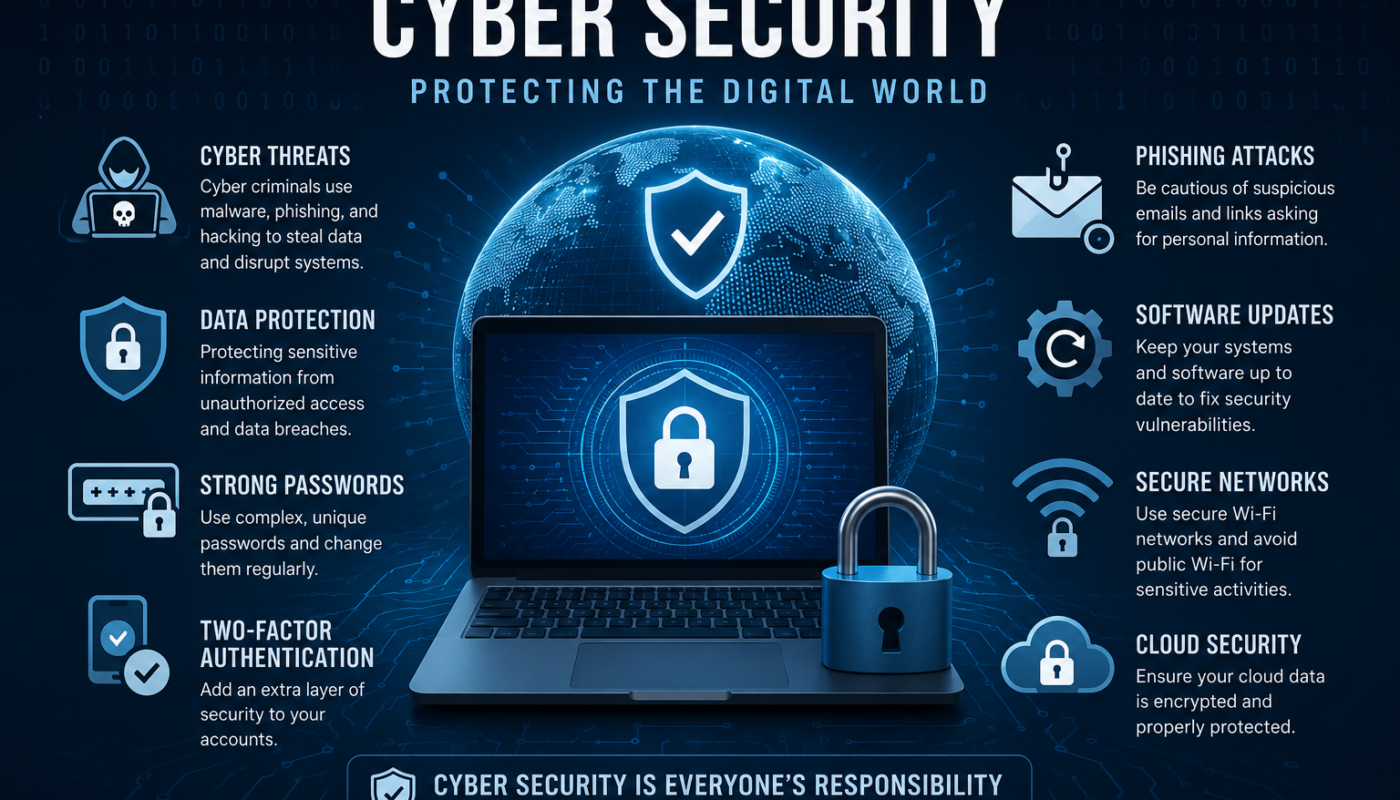
Cyber criminals use various techniques to attack computer systems and steal valuable information. Some of the most common cyber threats include:
1. Malware
Malware is malicious software designed to damage or gain unauthorized access to computer systems. It includes viruses, worms, spyware, trojans, and ransomware. Malware can slow down devices, steal sensitive information, or completely lock users out of their systems.
2. Phishing
Phishing is a cyber attack where criminals send fake emails, messages, or websites that appear legitimate. Their goal is to trick users into revealing personal information such as passwords, credit card numbers, or banking credentials.
3. Ransomware
Ransomware is a dangerous type of malware that encrypts a victim’s files and demands payment to restore access. Many businesses and hospitals have suffered major disruptions due to ransomware attacks.
4. Password Attacks
Weak or reused passwords make it easier for hackers to gain unauthorized access to accounts. Password attacks include brute force attacks, dictionary attacks, and credential stuffing.
5. Denial-of-Service (DoS) Attacks
A Denial-of-Service attack overwhelms a website or server with excessive traffic, making it unavailable to legitimate users. When multiple devices are used simultaneously, it becomes a Distributed Denial-of-Service (DDoS) attack.
6. Insider Threats
Not all cyber threats come from external hackers. Employees or trusted individuals may intentionally or accidentally expose confidential information, causing security breaches.
Types of Cyber Security
Cyber security consists of several specialized areas that work together to protect digital systems.
Network Security: Protects computer networks from unauthorized access, attacks, and intrusions using firewalls, intrusion detection systems, and secure network configurations.
Application Security: Ensures that software applications are developed and maintained securely by identifying and fixing vulnerabilities before attackers can exploit them.
Information Security: Focuses on protecting sensitive data from unauthorized access, modification, or destruction while maintaining confidentiality, integrity, and availability.
Cloud Security: Protects cloud-based services, storage, and applications by implementing strong authentication, encryption, and access controls.
Endpoint Security: Secures devices such as laptops, smartphones, tablets, and desktop computers from malware and cyber attacks.
Identity and Access Management (IAM): Controls who can access specific systems and data by using authentication methods such as passwords, biometrics, and multi-factor authentication.
Best Practices for Cyber Security
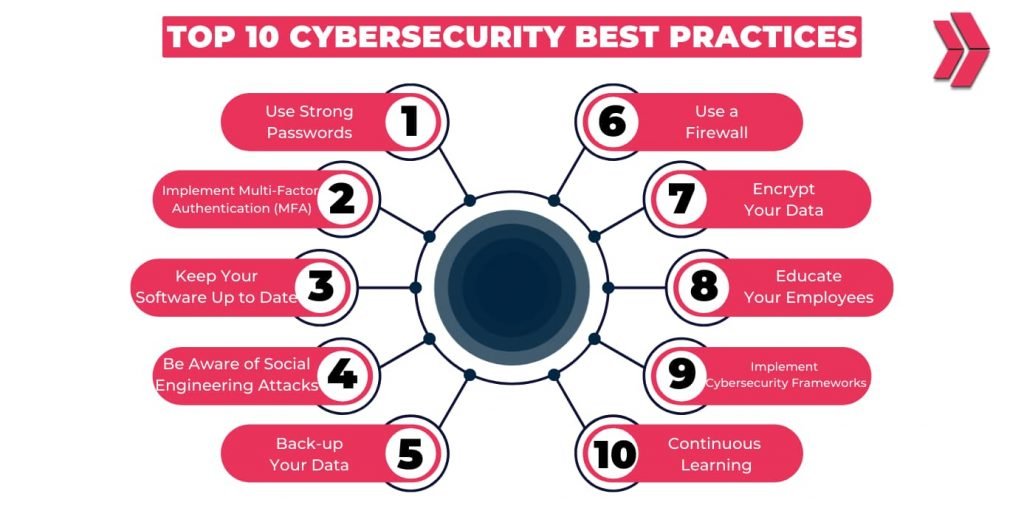
Everyone can contribute to cyber security by following simple but effective safety measures.
Keep operating systems and software updated with the latest security patches.
Install reliable antivirus and anti-malware software.
Avoid clicking suspicious links or downloading unknown attachments.
Back up important data regularly.
Use secure Wi-Fi networks and avoid sharing sensitive information on public Wi-Fi without protection.
Verify the authenticity of emails before providing personal information.
Regularly monitor bank accounts and online accounts for unusual activity.
Educate family members and employees about cyber security awareness.
Role of Artificial Intelligence in Cyber Security
Artificial Intelligence (AI) has become a powerful tool in modern cyber security. AI systems can analyze massive amounts of data, detect unusual behavior, identify potential threats, and respond to attacks much faster than traditional methods. Machine learning algorithms continuously improve their ability to recognize new malware and suspicious activities.
However, cyber criminals also use AI to create more advanced attacks, making cyber security an ongoing challenge that requires constant innovation and improvement.
Career Opportunities in Cyber Security
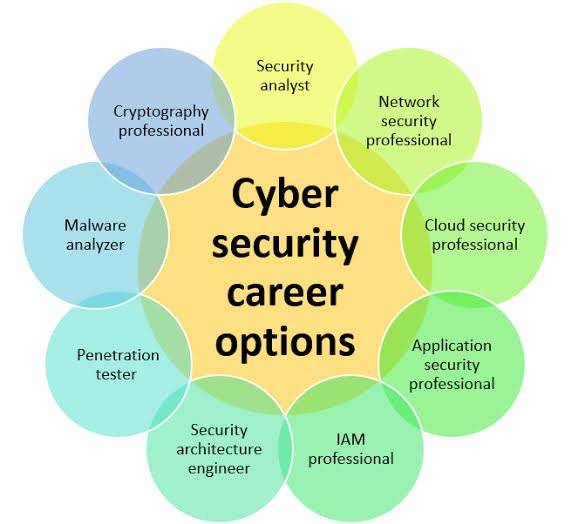
The demand for cyber security professionals continues to grow worldwide. Organizations require skilled experts to protect their digital infrastructure from evolving cyber threats. Popular career options include:
Cyber Security Analyst
Ethical Hacker (Penetration Tester)
Information Security Officer
Security Consultant
Network Security Engineer
Digital Forensics Expert
Security Architect
Incident Response Specialist
Cloud Security Engineer
Cyber Security Researcher
These careers offer competitive salaries, continuous learning opportunities, and strong job security due to the increasing importance of digital protection.
Despite technological advancements, cyber security faces several ongoing challenges. Cyber criminals constantly develop new attack methods that bypass traditional security systems. Many organizations struggle with outdated software, insufficient security budgets, and a shortage of trained cyber security professionals. Human error also remains one of the leading causes of security breaches, as employees may unknowingly click malicious links or use weak passwords.
The rapid growth of the Internet of Things (IoT), cloud computing, and remote work has expanded the number of devices connected to the internet, creating more opportunities for cyber attacks. As technology evolves, cyber security strategies must also adapt to address these emerging threats.
The Future of Cyber Security
The future of cyber security will be shaped by emerging technologies such as Artificial Intelligence, machine learning, blockchain, quantum computing, and advanced encryption techniques. Organizations will increasingly adopt zero-trust security models, where every user and device must be continuously verified before accessing systems.
Governments and businesses will continue investing heavily in cyber security to protect critical infrastructure, financial systems, healthcare organizations, educational institutions, and personal data. Public awareness and education will also become increasingly important in reducing cyber risks.
Conclusion
Cyber security is no longer optional—it is a necessity in today’s connected world. As our dependence on digital technology continues to grow, protecting sensitive information and computer systems becomes more important than ever. From individuals securing their personal accounts to multinational companies defending complex networks, everyone has a role to play in maintaining cyber security.
By understanding common cyber threats, following best security practices, and staying informed about emerging technologies, users can significantly reduce the risk of cyber attacks. Cyber security not only protects data and privacy but also ensures trust, reliability, and stability in the digital world. As cyber threats continue to evolve, continuous learning, awareness, and investment in security technologies will remain essential for creating a safer and more secure future for everyone.
 by
by